

Buying property in Mauritius – The Mauritian real estate market continues to attract numerous buyers every year, drawn by its exceptional lifestyle and promising investment opportunities.
With pristine beaches, a tropical climate, and attractive tax benefits, Mauritius appeals both to those seeking a second home, a pied-à-terre for vacations, and investors looking for high rental returns.
Yet, despite this appeal, some buyers make recurring mistakes. Due to a lack of information, preparation, or simply acting on impulse, they may underestimate their budget, overlook administrative procedures, or choose a poorly suited location.
The result? A project that could have been a success sometimes turns into a source of stress or financial loss. Discover the key mistakes to avoid when buying property in Mauritius and benefit from our practical advice to secure your investment and fully enjoy this little slice of paradise.
Understanding the Mauritian real Eestate market before investing: Key trends, features, and opportunities
- Identify common mistakes when purchasing property in Mauritius to secure your investment.
- Track the market’s evolution for foreign buyers, focusing on current trends and future outlooks.
- Discover how to generate passive income through short-term or long-term rentals and maximize your property’s profitability.
- Benefit from practical advice on choosing the best locations, optimizing rental management, and staying compliant with local regulations.

Pitfalls to avoid when buying property in Mauritius
Not planning for your budget and additional costs
One of the most common mistakes is focusing only on the listed price of a property, without accounting for extra expenses. Many buyers realize too late the importance of additional charges: notary and registration fees, management and maintenance fees (common in secured residences), transfer costs, upkeep (pool, garden, housekeeping), home insurance, and sometimes staff expenses.
Additional administrative fees may also apply for foreigners, such as obtaining authorization from the Economic Development Board (EDB).
Côté Sud tip: Before visiting a property, set a comprehensive budget. A local professional can help anticipate all costs and guide you toward a realistic financial plan, considering not only the purchase price but also long-term maintenance.
Neglecting legal and administrative obligations
Buying property in Mauritius is not the same as in Europe: local laws are strict, especially for foreign investors. Certain authorizations are mandatory, like EDB approval, which ensures the acquisition complies with legal requirements. A complete administrative file is also required: valid passport, proof of address, bank references, and proof of funds to comply with anti-money laundering regulations.
Many buyers sign too quickly or fail to check the property’s compliance and contract clauses, which can cause delays and legal complications.
Côté Sud tip: Work with a notary and an experienced local real estate agent. They will check each step and streamline the acquisition process.
Choosing an unsuitable location
A property may look appealing, but location remains crucial for a successful investment. Some buyers prioritize the view or aesthetics without considering the surroundings: distance from amenities, underdeveloped areas, or nuisances (traffic, noise, specific weather conditions).
A poor location can reduce rental yield and complicate resale. Conversely, a property in a dynamic area, close to beaches, shops, and infrastructure, retains strong appeal.
Côté Sud tip: Take the time to visit several areas. Research local development projects (roads, schools, shops) to anticipate future value appreciation.
Overlooking condominium fees
Most properties aimed at foreigners are located in secured complexes offering shared services (security, landscaping, pool, clubhouse, etc.), which come with recurring condominium fees.
Many buyers, attracted by the comfort, forget to factor in these costs. If not anticipated, they can weigh heavily on the annual budget.
Côté Sud tip: Always request a detailed statement of fees before signing. Compare the services provided and ensure they align with your objectives—whether it’s a second home, a rental investment, or a primary residence.
Failing to consider resale value and profitability
A property purchase should not be driven solely by a “heart-over-head” decision; it is also a long-term investment. Many buyers neglect resale potential or rental profitability, ending up with a property that is hard to sell or generates low returns.
Villas with sea views or located in sought-after areas generally maintain high value and strong occupancy rates, both for short-term rentals and long-term leases.
Côté Sud tip: Before buying, study the local market, rental demand, prices, and potential appreciation to secure your investment.
Buying property in Mauritius is an exciting endeavor but requires careful preparation.
By avoiding these common mistakes—overlooking additional costs, underestimating legal and administrative steps, choosing a poor location, ignoring condominium fees, or neglecting resale potential—and by working with local experts, you maximize your chances of success.
Mauritius remains a top destination to invest, enjoy an exceptional lifestyle and build lasting wealth.
Evolution and outlook of the real estate market in Mauritius
In the first part of this article, we discussed the common pitfalls to avoid when buying property in Mauritius. You now know how to secure each step of your project and invest with confidence.
To make informed decisions and go further, it is essential to understand the context of the Mauritian real estate market, its recent evolution, and the trends shaping the years ahead.
Opening the market to foreign investors: a strategic opportunity
For several years, Mauritius has established itself as a prime destination for international buyers, thanks to its exceptional quality of life combined with an attractive tax framework. To facilitate foreign investment, several real estate schemes have been implemented:
- IRS (Integrated Resort Scheme): luxury villas within complexes offering exclusive services such as spa, golf, or concierge.
- RES (Real Estate Scheme): smaller-scale high-end residential projects.
- PDS (Property Development Scheme): modern properties with eco-friendly infrastructures and premium services.
- Smart City Scheme: smart cities integrating housing, offices, and commercial spaces within a sustainable and connected environment.
These programs have structured the real estate market, providing security and quality for international investors while developing ambitious and appealing projects.
Key market figures for foreign investors
The Mauritian real estate market has experienced strong growth since it opened to non-citizens, with particularly marked expansion since 2020:
- MUR 156.6 billion: total amount invested by foreign buyers.
- 5,396 luxury residences sold to non-citizens.
- 64% of buyers come from France (42%) and South Africa (22%).
- Average PDS property price: between 500,000 and 1.5 million USD, depending on location and amenities.
Note: purchasing a property from 375,000 USD automatically grants the buyer a permanent residence permit—an important advantage for those planning to settle long-term on the island.
Trends and outlook for the coming years
The Mauritian real estate market continues to grow, adapting to the needs of foreign investors:
- Strong demand for luxury sea-view villas: properties offering an exclusive lifestyle remain highly sought after. Popular areas include Grand Baie, Tamarin/Rivière Noire, and the southwest, particularly Baie du Cap and Bel Ombre.
- Development of Smart Cities: these modern urban hubs attract more and more investors thanks to premium living environments and innovative infrastructure.
- Rising rental yields: demand for long-term rentals, driven by expatriates and remote workers, continues to grow. Investors can expect net yields of 4–6%, depending on property type and location.
- Attractive taxation: Mauritius maintains a favorable tax framework, with no property tax, no residence tax, and no capital gains tax on real estate, enhancing the island’s competitiveness.
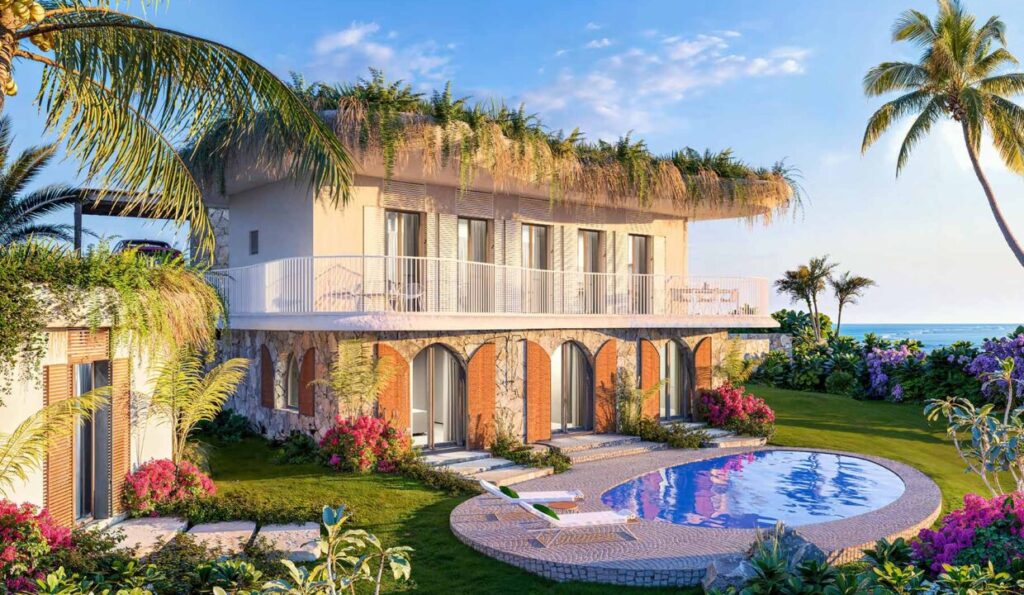
Generating income through real estate rentals in Mauritius
Now, let’s focus on one of the main drivers of investment in Mauritius: generating income through rentals, whether short-term or long-term.
The island attracts both tourists and expatriates, creating rental opportunities suited to different types of investors.
Short-term rentals: maximizing income
Short-term rentals are especially popular due to the steady flow of international visitors, drawn by the beaches, tropical climate, and quality infrastructure. Advantages:
Advantages :
- High daily rates for premium properties, typically between €150 and €500, depending on location and amenities.
- Strong demand during the high season (November to April), with occupancy rates often reaching 70–80%.
- The potential to optimize income by entrusting management to a professional or concierge service.
Regulations:
Operating a short-term rental requires a license from the Mauritius Tourism Authority (MTA). This ensures the property complies with safety and quality standards. In some residential complexes, rental management through the developer may be offered or even mandatory.
Long-term rentals: stability and consistent income
With the growing number of expatriates and international professionals, long-term rentals provide a secure and stable option.
Advantages :
- Predictable, regular monthly income.
- Less day-to-day management and lower turnover, unless a concierge service is used.
- The possibility to lease to companies for their expatriate employees.
Regulations:
Non-Mauritian property owners can rent their property long-term without specific restrictions. However, it is recommended to formalize the rental through a written contract that clearly outlines the obligations of each party.
Rental profitability: key factors
Several elements influence the profitability of a property in Mauritius:
Location: The North, the West (Flic-en-Flac, Tamarin, Rivière Noire), and the South-West around Le Morne are highly sought after.
Type of property: Luxury villas and apartments in secure residences, suitable for both tourists and expatriates.
Features and services: Swimming pools, 24/7 security, access to a golf course or private beach enhance rental potential.
On average, net annual returns range from 4% to 7% for short-term rentals and 3% to 5% for long-term rentals.
Property management in Mauritius
To simplify the management of their properties, many investors rely on specialized companies:
Standard management: Rent collection and administrative management (5–10% of annual rent).
Full management: Maintenance, repairs, and handling check-ins and check-outs (up to 20%).
Premium services: Concierge, gardening, and tailored household staff.
Professional management helps maximize profitability while minimizing the owner’s daily constraints.
Taxation for non-resident investors
Mauritius offers an attractive tax framework:
Tax rate: A flat 15% on net rental income, after deducting eligible expenses (management fees, loan interest, property depreciation).
Double taxation agreements: Income earned in Mauritius is generally not taxed in the investor’s country of residence, notably for French investors.
Investing in real estate in Mauritius provides unique opportunities, whether for a personal residence or to generate attractive rental income. To maximize your chances of success and secure every step of your project, it is essential to work with professionals who are experts in the local market.
Entrust your project to Côté Sud. Our team supports you from property selection to rental management, including all administrative procedures, turning your investment into a sustainable and stress-free success.

